Experience | Discovery Education Nurture Curiosity Mon, 28 Jul 2025 17:25:41 +0000 en-US hourly 1 https://wordpress.org/?v=6.8.3 Unlocking Potential in 2025: A New Era of Discovery Education https://www.discoveryeducation.com/blog/de-news/unlocking-potential-in-2025-a-new-era-of-discovery-education/ Tue, 08 Apr 2025 19:34:33 +0000 https://www.discoveryeducation.com/?post_type=blog&p=186447 For over 20 years, Discovery Education has empowered educators to inspire curiosity, build confidence, and accelerate learning. As education evolves—shaping how students learn, increasing demands on teachers, and adding complexity to classrooms—we have evolved too, continuously innovating to meet these changing needs. This year, we’re introducing updates designed to make teaching more effective, engaging, and […]

The post Unlocking Potential in 2025: A New Era of Discovery Education appeared first on Discovery Education.

]]>

For over 20 years, Discovery Education has empowered educators to inspire curiosity, build confidence, and accelerate learning. As education evolves—shaping how students learn, increasing demands on teachers, and adding complexity to classrooms—we have evolved too, continuously innovating to meet these changing needs. This year, we’re introducing updates designed to make teaching more effective, engaging, and personalized—ensuring educators have the support they need to create lasting, meaningful learning experiences. And while many of these updates support educators, others are designed for students, nurturing their natural curiosity and joy in learning.

With every advancement, improvement, and new offering we bring, one thing will remain constant: our commitment to being the most trusted learning partner, equipping educators and engaging students to succeed in a dynamic world. We’ve listened closely to students, teachers, school leaders, district administrators, and the broader educational community as they have shared their challenges, celebrations, and concerns, and these meaningful conversations have informed our work for the back-to-school season.

Innovative Tools to Enhance Teaching and Learning

Teachers tell us they spend countless hours on assessments, lesson planning, and differentiation. In fact, 94% of educators seek tools that give them time back to focus on students. We’re helping streamline these tasks with new enhancements in Experience, including:

Personalized Content Recommendations High Res scaled jpg

Personalized Content Recommendations

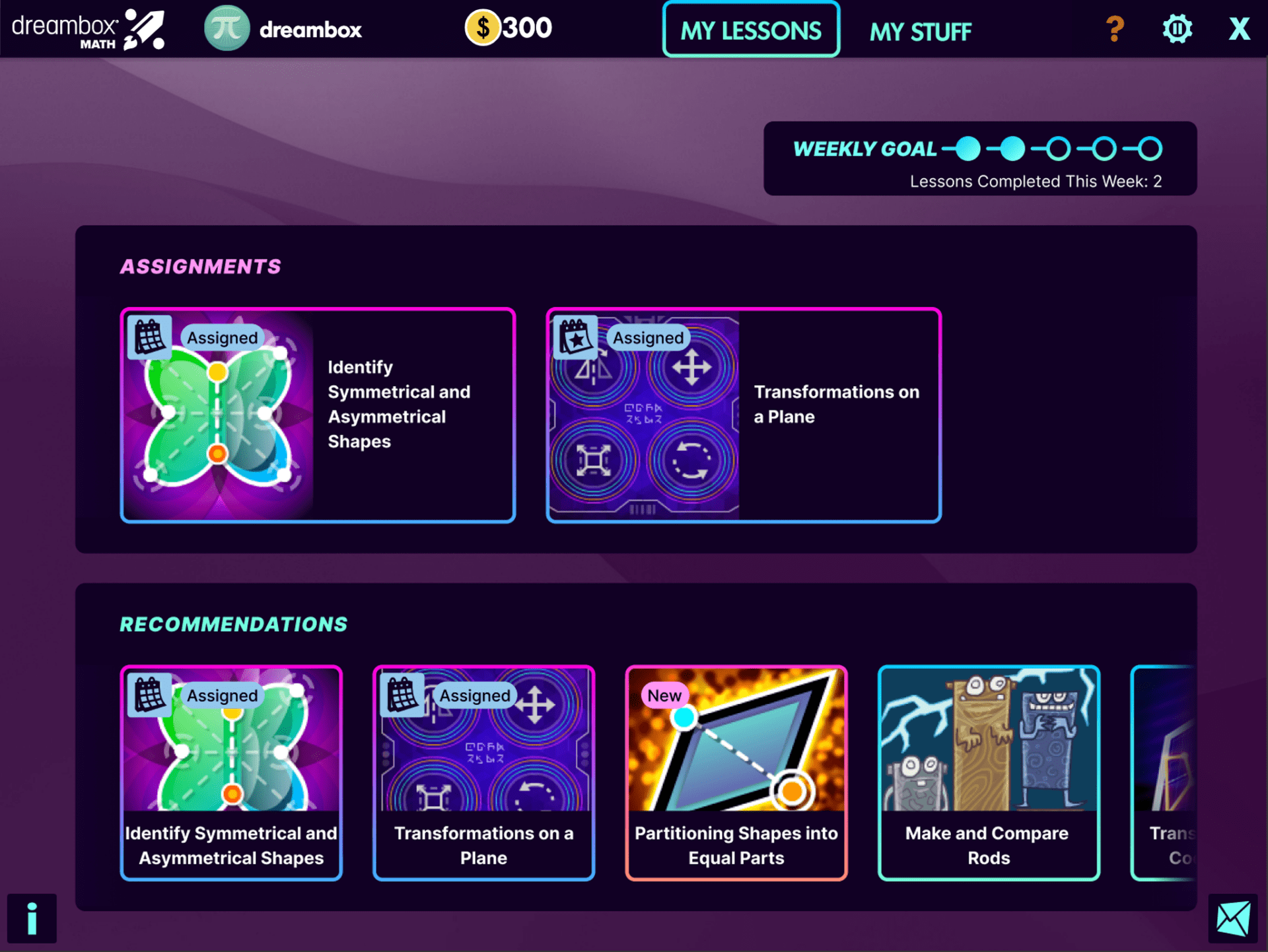
There are thousands of amazing, standards-aligned resources in Experience. Now, finding the perfect resource for any lesson is even easier. Our new Curriculum Aligned Resources feature allows educators to quickly access handpicked content to enhance their core curriculum. Teachers can also get recommendations based on their unique profile and preferences to suggest relevant resources specifically curated for their classroom.

AI TeacherTool | Assess

Our new AI-powered assessment generator allows educators to create standards-aligned assessments in minutes. Teachers can easily customize by reading level, question type, and Bloom’s Taxonomy—all while leveraging Discovery Education’s trusted, cross-curricular resources.

AI TeacherTools Assess High Res png
GoogleAdOn2 png

Improved Integrations

With the new Google Add-on, Discovery Education Experience now integrates seamlessly with Google Classroom, making access to quality content easier and more efficient for educators and students. The new integration offers simplified assignments, more focused access for students, and time-saving workflows for lesson planning.

Enhancing Math Engagement and Support for Educators

Over 90% of teachers believe that personalized instruction can improve learning outcomes, such as test scores, learning retention, and academic performance. As educators work furiously to address declining math scores, we’re making sure they have the right support to differentiate math instruction and drive student outcomes. 

a11ytenframe smaller gif

Improved Accessibility

DreamBox Math lessons now integrate assistive technology, keyboard navigation, and multiple modalities to ensure all students can engage independently. Learn more about these updates HERE.

Enhanced Engagement

We are rolling out updates to some of the most popular lessons in DreamBox Math to make it easier for students to start, play, and complete lessons successfully. Students will find clearer, always-available instructions, updated scaffolding, enhanced visuals, easier interactivity, and added real-world context for mathematical concepts.

too soon 1 gif
lesson chooser screenshot png

Refreshed Middle School Math Environment

We know that students will feel more engaged and excited about algebra readiness when they can work in an age-appropriate environment. The new middle school environment has a sleek new look and introduces an upgraded lesson chooser, making it easier for students to navigate assignments and personalized lessons. Check out the new middle school experience HERE.

Helpful Curriculum Guide

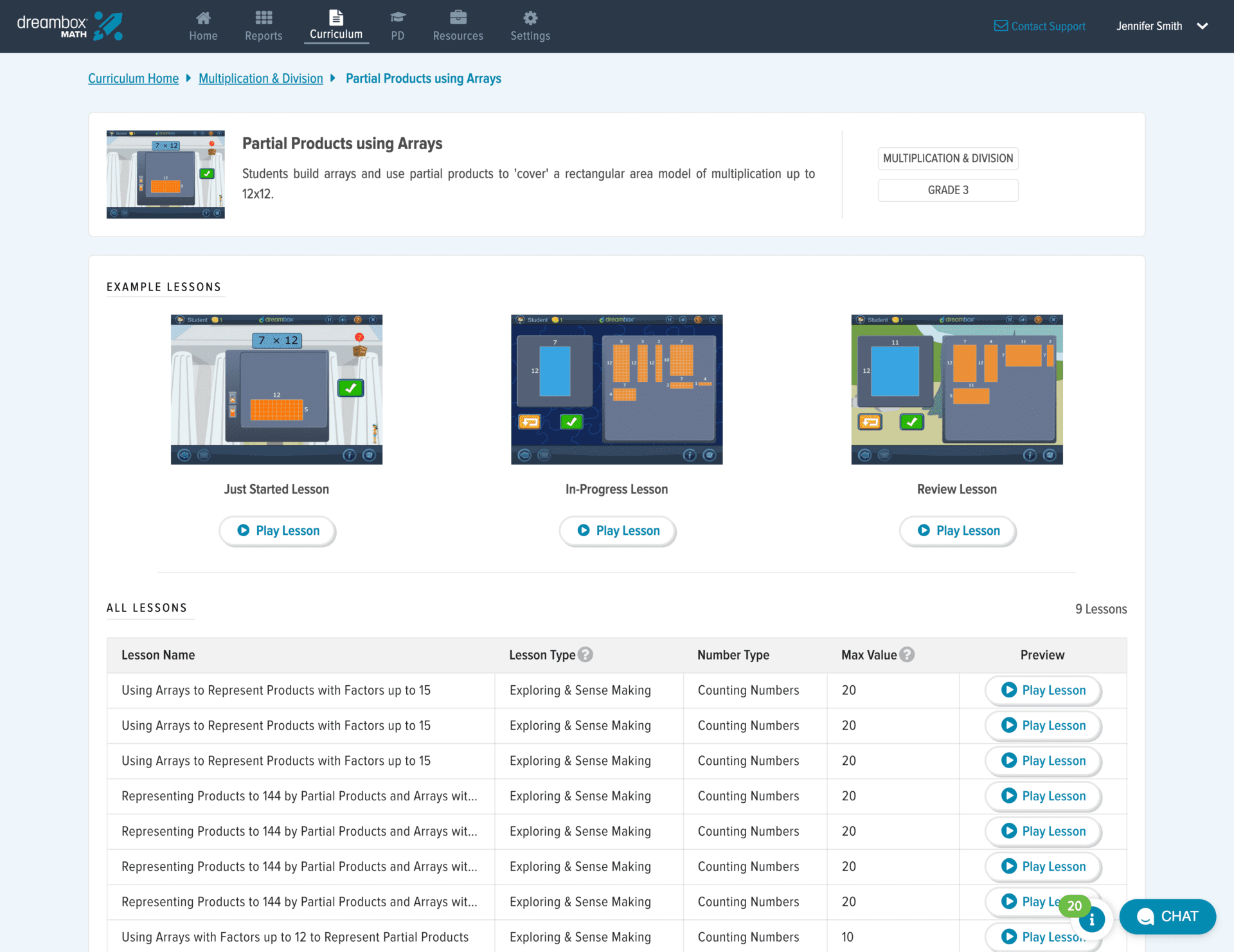
The new in-product interactive curriculum guide enables educators to explore and align lessons with state standards for targeted instruction. Learn more about the curriculum guide.

Curriculum Guide Home Domains MD Partial Products wArrays png

Building Future-Ready Classrooms

Students crave access to content that excites and inspires them. And, when educators spark connections showing how daily lessons apply inside of class and beyond, they can make learning meaningful. In fact, 80% of students believe that content that connects to real-world experiences is essential for their day-to-day learning.

03 CC Educator Connector Profile 011025 jpg

Career Connect Available to All Experience Partners

Career Connect brings industry professionals right into classrooms, allowing teachers to request virtual visits from employee volunteers. The feature provides experiential knowledge that reinforces educational concepts as it relates to real-world problem solving and innovation.

New Career resources in Experience will help educators show students the real-world relevance of their daily learning while building career awareness, exploration, and preparedness. These resources provide a strong connection to K-8 instruction, ensuring that career readiness begins early and empowers students to imagine endless possibilities beyond the classroom.

New, Exciting Lessons Across Our Programs

  • New Experience Lessons: Experience’s vast library of curated educational content continues to grow to meet the needs of modern K-12 classrooms. For back-to-school, educators will find even more instructional resources with an Enhanced Instructional Strategy Library and Model Lessons. Students and teachers will also have access to new K-2 civics lessons, ELA Fix-It Models for middle school, and new DE Original videos for ELA and social studies.  
  • DreamBox Reading Expands to Grade 5: DreamBox Reading’s adaptive engine, already providing personalized reading instruction for PreK-2 students, will now support literacy development for grades 3-5. New lessons include foundational phonics, fluency, vocabulary, and comprehension strategies, helping older students master essential reading skills.
  • More Mystery Science Fun: Mystery Science will feature new resources, including open-and-go lessons and vocabulary supports on topics like matter and water. Plus, we’re updating Anchor Layers on all units.

Get an in-depth look into the exciting updates coming for the 2025-2026 school year!

The post Unlocking Potential in 2025: A New Era of Discovery Education appeared first on Discovery Education.

]]>
Personalized-Content-Recommendations-High-Res-scaled.jpg AI-TeacherTools-Assess-High-Res.png GoogleAdOn2.png a11ytenframe-smaller.gif too-soon-1.gif lesson-chooser-screenshot.png Curriculum-Guide-Home-Domains-MD-Partial-Products-wArrays.png 03-CC-Educator-Connector-Profile-011025.jpg
Sparking Student Interest in Space https://www.discoveryeducation.com/blog/teaching-and-learning/sparking-student-interest-in-space/ Mon, 07 Apr 2025 19:23:21 +0000 https://www.discoveryeducation.com/?post_type=blog&p=183565 Thanks to numerous events occurring this school year, it’s an exciting time for those of us that teach about space and space travel! From solar eclipses to developments in NASA’s Artemis programs, this school year offers unique opportunities to spark students’ interest in our galaxy. Discovery Education has a wealth of resources to support educators […]

The post Sparking Student Interest in Space appeared first on Discovery Education.

]]>

Thanks to numerous events occurring this school year, it’s an exciting time for those of us that teach about space and space travel! From solar eclipses to developments in NASA’s Artemis programs, this school year offers unique opportunities to spark students’ interest in our galaxy.

Discovery Education has a wealth of resources to support educators teaching students about these events, as well as ways to add context to student learning by connecting scientific principles to space content.

Starting Your Space Exploration

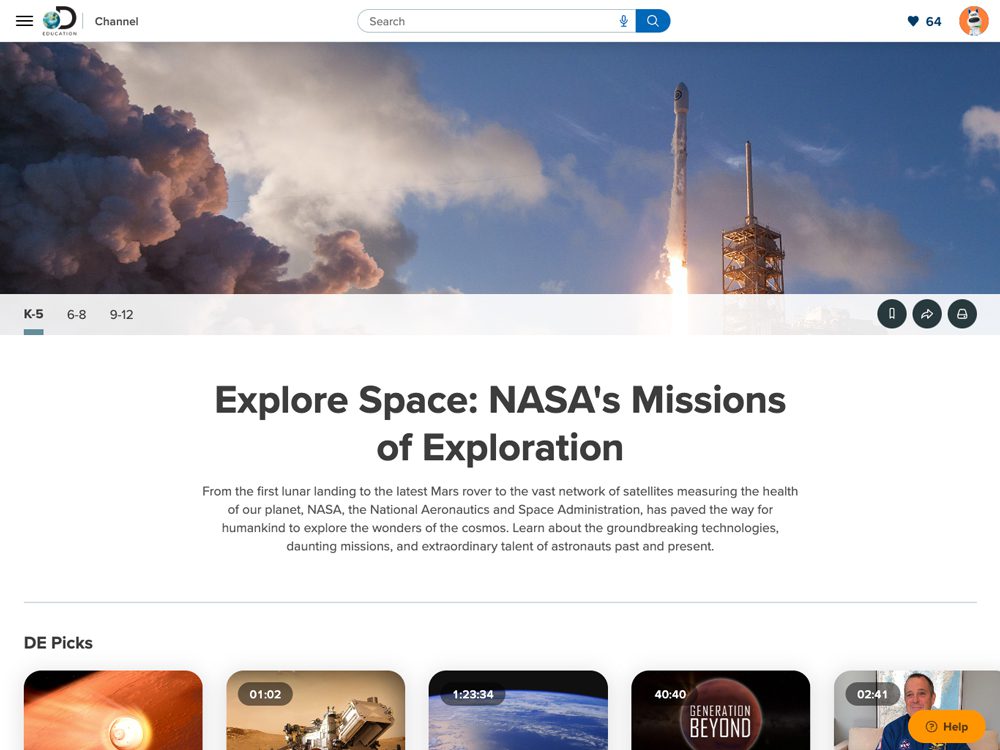
Start your space lessons with the Explore Space: NASA’s Missions of Exploration Channel, where you can find fantastic resources on popular space topics. There are great introduction videos on the James Webb Telescope, the largest, most powerful, and most technologically challenging space telescope. Understanding how this technology is used can help students consider how galaxies are studied, and then they can view images captured by this amazing telescope! This channel also includes news on the Ingenuity helicopter, which is miraculously still going strong after recently completing its 59th flight in September 2023.

For younger students, you can introduce the excitement of space with fun animated segments such as Planet Cosmo and Earth to Luna! There are many ways to make your space lessons fun, exciting, and best of all, relevant! If you aren’t sure where to infuse space content into your science lessons, finding space-related events that are coming up and using these events to build context for your students can help the introduction feel meaningful.

The upcoming Artemis missions will create a ton of excitement as the four-astronaut crew was recently named and we are moving closer to the November 2024 launch date! Discovery Education has some terrific resources to share in the Moon Channel on the historic missions to the moon, such as The Apollo Project, as well as information about the moon phases from the DEmystified series, and an overview of the partnership with NASA and SpaceX in The Future of Space Travel.

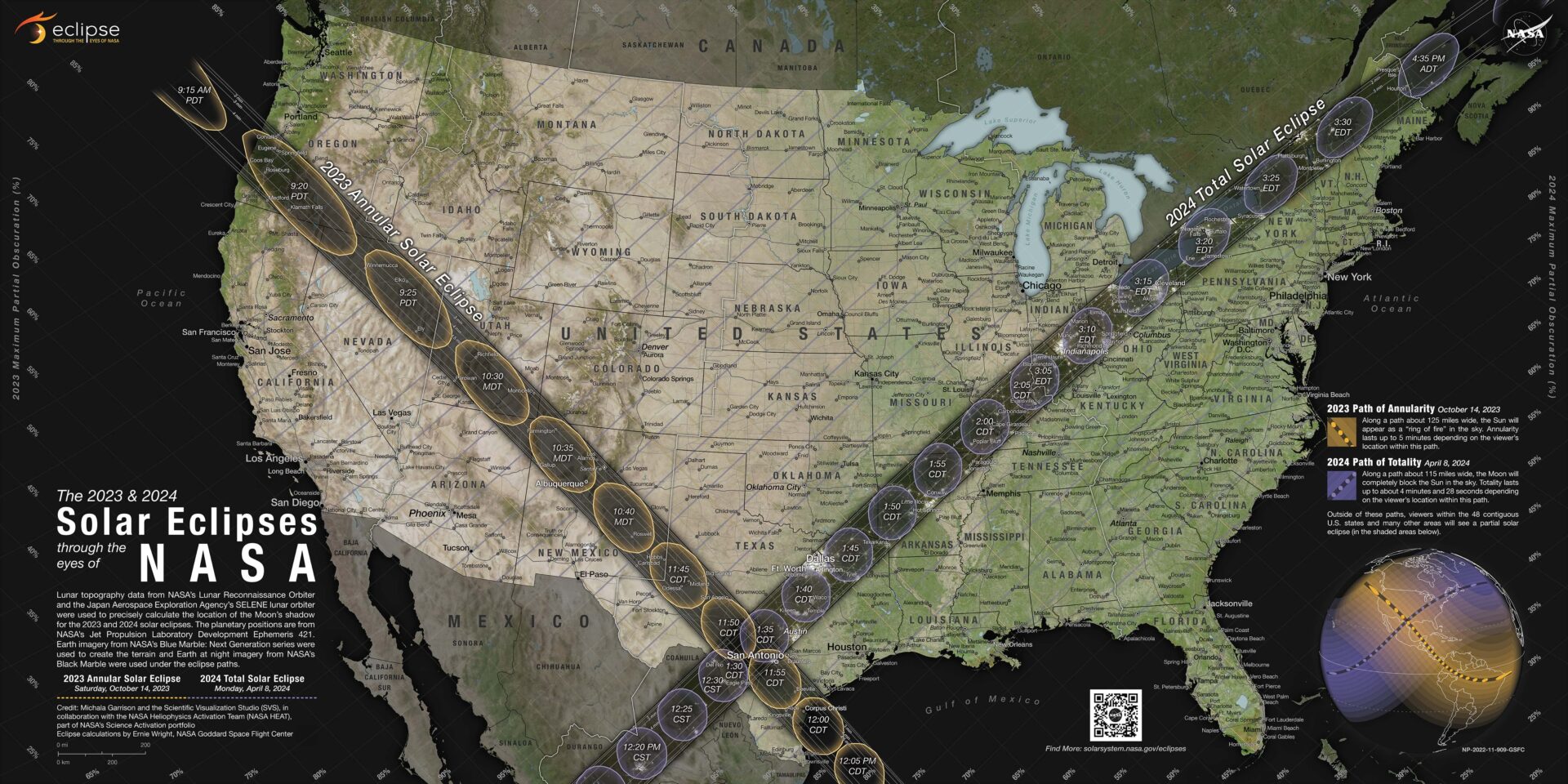
The upcoming solar eclipses are other exciting space events you can connect into your lessons! An annular solar eclipse occurred on October 14, 2023, and a total solar eclipse will occur on April 8, 2024. The Solar Eclipses Channel has great resources, videos, and activities for students in grades K-12 that both describe the natural phenomenon of an eclipse. 

Eclipses are unique solar events, and after the April 8 total solar eclipse, the next eclipse won’t occur over the United States until 2044! Discovery Education Experience has new resources to help students explore the wonders of this upcoming eclipse such as a video on How to Safely Watch a Total Solar Eclipse, activity to create a Pinhole Projector, and a video giving students a tour of NASA’s 2024 Solar Eclipse Map. NASA is also sharing a livestream so students can watch as the total solar eclipse moves across Mexico, the United States and Canada. 

Additional Solar Eclipse Resources

facts sheet jpg

Eclipse Facts Sheet

Describes how a solar eclipse happens when the Moon moves between the Sun and Earth and about different types of solar eclipses, eclipse safety, and eclipse activities.
eclipse video jpg

Solar Eclipse Video Playlist

Videos in both English and Spanish explaining the phenomena of the "disappearing sun" and offering context about the total solar eclipse.
NASA map jpg

NASA's 2023 and 2024 Eclipse Map

Based on observations from several NASA missions, this map details the path of the Moon’s shadow as it crosses the U.S. during the annular solar eclipse in 2023 and total solar eclipse on April 8, 2024.

Creating Relevant, Fun Learning Opportunities

Adding a short, creative project-based learning element to your lessons around these current events can bring some additional engagement and excitement, even for students who may not think they’re passionate about space topics. For example, you can incorporate TimePod Adventures to allow students to “visit” another planet’s surface or launch and fly a rocket in HOME: Impossible Field Trip, which can bring the space concepts of a lesson to life. The AR Adventure Kit offers fun ideas that pair with the state-of-the-art, life-size augmented reality featured in TimePod Adventures.

Gamification and animation can make any topic fun and offer students a chance to use new technology tools! By using a free tool like Animate with Audio in Adobe Express, students can research a mission, planet, moon, or other phenomena and then create their own cartoon guessing game just using audio. This is always fun because the games can be played outside of the classroom with friends, family, and future students for years to come!

Resources like these are only the start, as there are so many amazing videos, articles, interactives, and more to discover. Even virtual field trips like the Journey to the Extreme: Virtual Field Trip to Mars, which includes an interview with NASA astronauts and program executives about the Curiosity mission and the ultimate goal, a journey to Mars! Start with one space lesson around a current event and create interested students who want to blast off to further exploration!

Jean Johnson

Jean Johnson

Inspire Your Students with Firsthand Accounts of Career Journeys with NASA

The post Sparking Student Interest in Space appeared first on Discovery Education.

]]>
DE-Explore-Space-NASA.jpg Solar-Eclipses-Discovery-Education.jpg facts-sheet.jpg eclipse-video.jpg NASA-map.jpg TimePod-Adventures-Augmented-Reality-App.png Jean Johnson
Encouraging Career Exploration in the Classroom https://www.discoveryeducation.com/blog/future-ready-students/encouraging-career-exploration-in-the-classroom/ Mon, 07 Apr 2025 19:00:00 +0000 https://www.discoveryeducation.com/?post_type=blog&p=183142 What kind of skills are needed for your career? Does your position require strong communication skills, knowledge of software, efficient teamwork, or an understanding of machinery? While these skills are strengthened over time, the journey starts with exploring career options and considering which path is most interesting! Here to share how she introduces career skills […]

The post Encouraging Career Exploration in the Classroom appeared first on Discovery Education.

]]>
What kind of skills are needed for your career? Does your position require strong communication skills, knowledge of software, efficient teamwork, or an understanding of machinery? While these skills are strengthened over time, the journey starts with exploring career options and considering which path is most interesting!

Here to share how she introduces career skills in her classroom and encourages her students to explore various careers is Delaware business educator, Heidi Corbin!

what does curiosity look like png

The Importance of Career and Technical Education

Career & Technical Education is important for K-12 students because these classes help to connect core content classes such as English and math to real life lessons and situations. As students progress through different courses, it may be difficult for them to connect how these courses will prepare them for careers or even which career will be best for them. The moment to make a career choice is far off for middle school students, but that means starting to consider career options early just gives them a head start!

CTE programs give students a chance to explore careers that they might be interested in after graduation. The exploration lessons and curriculum give them insight into careers they may already be familiar with as well as careers they may not have been aware of. As a middle school teacher, I help to prepare students to possibly earn an official credential in a career field of interest through high school coursework.

Career Paths and Skills

I like to focus primarily on the talents and strengths of the individual student and how it can help them have a better understanding and comfort level when navigating various core classes. My students first take a learning styles quiz and a personality quiz. I reiterate that their answers should be true to their own likes and dislikes, not their friends or family or even teachers’ opinions. Their honest answers are then analyzed, and they get specific input on what career paths and/or industries may be a good fit for them. I’ve used a variety of personality and learning styles quizzes with my students, and the Myers–Briggs personality assessment is one of my favorites!

There are many “lightbulb moments” when students get an analysis of possible careers based on their honest input about their own likes and dislikes! More often than not, they are surprised since they are at an age where they have a more challenging time seeing themselves for who they are instead of trying to fit in.

One personality quiz created by Major Clarity gives insight into the student by offering percentages of how much the following categories relate to the student’s personality – Conventional, Social, Realistic, Investigative, Enterprising, Artistic. I remember one student being upset about having a high percentage for being “conventional.” However, after reading the category description, the student actually agreed with it! 

The quiz also shared that conventional people (titled “Organizers”) like to work with data, have clerical or numerical ability, carry out tasks in detail, or follow through on others’ instructions. They often prefer precise, rule-regulated, orderly, and unambiguous activities and their traits often include conforming, efficient, practical, unimaginative, and inflexible. The quiz recommended a possible career path in legal services, education, and healthcare. This student was set on a career in nursing, but the quiz helped them come to an understanding of how legal services and education might be a match too. Learning a career in education could be a good fit was the biggest surprise for this student because as the student said to me, “I would never want your job!” This helped open a conversation about the other ways to be a part of the world of education, which led to another epiphany—that working in education doesn’t just mean teaching!

I educate students about career paths that will require various levels of education which can range from apprenticeship, certifications, two-year degrees, four-year degrees and so on. A four-year college degree is not the only way to reach success, and shining a light on careers that have different requirements can help students plan for a next step that is right for them. However, students don’t always know what type of formal training or schooling is required for careers they find interesting, so I offer information on careers spanning all types of training programs.

Career skills are infused into my lessons and curriculum via real-life simulations and questions of the day. Both give me insight into their level of understanding and how to further direct the learning and exploration. Offering students the chance to look “behind the scenes” on real-life careers can help them explore the limitless career possibilities that exist for them! From the new heights in aerospace innovation to the work being done to protect our waterways, there are many Discovery Education resources that help highlight career paths and skills!

Advice to Other Educators

For teachers just getting started, I would recommend the Career Profile videos, Interactives, Virtual Field Trips, and the investigative videos such as Calculating Different Types of Pay. There are also many Channels that focus on a wide variety of topics that may interest students and spark interest in a possible future career, like animals, music, and video games!

My advice to teachers planning career exploration lessons is to make it as authentic as possible. Utilizing virtual career field trips, videos from experts or even providing real-life simulations to connect school to the real world. Students can feel that the “real world” is so far away that it isn’t worth thinking about, but bringing the real world into the classroom can help make learning relevant and inspire student engagement! 

I’ve found that financial literacy lessons that include real-life simulations give students insight into what comes with working, and don’t just focus on making an income or fun ways to spend the money they earn. Earning and budgeting money is a big part of being a successful adult with a career! One of my favorite lessons is a gift budgeting activity where students are given $300 to spend on five people. Students are required to find a total of five gifts (one gift per person) that fit into their budget—and no cash or gift cards are allowed to be gifted! These real-world scenarios also help students better understand why adults say “no” to buying items children may want in the moment and help them set their sights on the future!

Middle school students have many milestones to meet before they enter the workforce, but it all starts with exploring different careers! Finding ways to nurture your students’ interests and help them learn about skills needed to excel in their career of choice can set them up for success—and start their journey early!

Learn More about Discovery Education’s Partnership with Otus!

The post Encouraging Career Exploration in the Classroom appeared first on Discovery Education.

]]>
what-does-curiosity-look-like.png science-reading-tile.jpg Picture of Heidi Corbin
Inspiring Student Leadership and Learning https://www.discoveryeducation.com/blog/teaching-and-learning/inspiring-student-leadership-and-learning/ Fri, 04 Apr 2025 19:34:10 +0000 https://www.discoveryeducation.com/?post_type=blog&p=183371 In school, students learn academic content, build critical thinking skills, and grow as people! To create learning experiences that accomplish this, two educators in the Verona Area School District decided to join forces. They found an innovative way to bring high school and elementary school students together through Discovery Education’s Virtual Field Trips. Meet the […]

The post Inspiring Student Leadership and Learning appeared first on Discovery Education.

]]>

In school, students learn academic content, build critical thinking skills, and grow as people! To create learning experiences that accomplish this, two educators in the Verona Area School District decided to join forces. They found an innovative way to bring high school and elementary school students together through Discovery Education’s Virtual Field Trips.

Meet the Team Behind the Magic

Rita Mortenson png

Rita Mortenson, Educational Technology Coach

I’ve been teaching for over 30 years and am currently a high school Educational Technology Coach, where I work with about 1,800 students and 200 staff members on a variety of technology topics. I’m an Apple Distinguished Educator, a Google Innovator, am ISTE certified, and love being a DEN STAR!

Lisette Venegas png

Lisette Venegas, Secondary Multilingual Programs Manager

I have been teaching for over 23 years and have taught Pre-K–4th grade, worked with multilingual and special education students, and been a library media specialist, lead teacher, instructional coach, and curriculum learning specialist. I am currently the Secondary Multilingual Programs Manager for the Verona Area School District. I truly find joy in working with the students, families, and staff on a daily basis, and being a DEN Star is amazing!

Why Virtual Field Trips?

Over the past few years, we have probably done 30 Virtual Field Trips together for a variety of grade levels. It’s really fun for students and teachers!

This started because we saw how great the Virtual Field Trips are and wanted to spread the word to other teachers. These field trips are more than just a video to show your students, and they’re more than just a part of a lesson. Working together to create these events and activities around the VFTs helps us show teachers that yes, this online content is there to engage your students, but you can build out so much more from that. And because the VFTs are embedded in Discovery Education Experience, teachers can share the VFT content with students who may have missed the hands-on experience.

Creating joy for students through these hands-on activities can help them learn new things or show what they have learned throughout a unit. For example, when elementary students completed a unit on weather, we set up an Extreme Weather VFT experience with different stations students visited with high schoolers. This experience helps teachers visualize what they can do with all of the online content they have and how to make it fun and exciting for their students.

How to Get Started

To start something like this at your school, find another teacher who is interested in trying something new. When launching new projects, it’s easier to start with a small team. Team up with one other teacher and work together to plan your first event. Interest in the events will grow as other teachers see what your students accomplish!

Our first activity used the NFL Play 60 Virtual Field Trip. Working with separate age groups (high school and elementary school), requires some brainstorming from the teachers to determine ways the content can be engaging for all students. The first year, we brought the football team to the elementary school. Today, we bring in students from different high school athletic programs and academic programs to help facilitate the activities for the younger students.

Our events start with watching the Virtual Field Trip, then rotating through a few relevant activities. To help other teachers plan these events, we created a presentation to share with other DE educators and have updated the planning into a simple process. Planning two or three stations can be a great start, and you have to be ready to brainstorm with other teachers in your school. The planning should take about an hour, but it should be fun. Once we review the content and plan the stations, away we go! At this point, we’ve done planning in as little as 20 minutes.

These events will eventually become popular in your district, so we recommend having a digital sign-up where teachers can share what topics they would like to cover and how they want to pair up the students. For example, a second-grade teacher may look at their curriculum and notice that their weather unit in November could be a great opportunity to pair up with the high school about a similar topic.

Once we identify interested teachers, we determine which school site is better equipped to host the event—the elementary or the high school. For example, the high schools often have science labs stocked with materials if the events are heavy in experiments. It takes about a month to be fully prepared because you’ll have to consider details like transportation, scheduling, and permission slips. Once we have planned the logistics, we hand the activity planning over to the older students!

"I have one student who's almost in 8th grade, and when she sees me in the building, she asks me if I remember the Virtual FieldTrip we did with her third grade class! It brings a smile to my face knowing these kids remember these events." - Lisette Venegas, Secondary Multilingual Programs Manager

Planning the Activities

We kick off the activity planning by gathering the high school students and running through a few steps to help guide them.

  1. Explain the topic that will be covered.

  2. Have the students watch the VFT and use the accompanying Studio SlideShow to help chunk out the information and pose questions throughout.

  3. Once they’ve seen the content, we encourage them to consider what types of stations to include in our collaborative event.

  4. Ask the students to design a fun, themed activity around the skills we are planning to showcase, practice, and learn that also relate to the theme of the VFT.

When we did the STEM Forward Virtual Field Trip with Olympian Katie Ledecky, we had the students decorate their own Olympic Medal to get them excited about the content. Then, after watching the Virtual Field Trip, we went into the field house where we held relay races and celebrated with the school mascot. These events include the skills from the VFT but also help build our community!

Before pairing up the right students to work together, consider the content and how different groups of high school students could share what they’re learning with the younger students.

For example, one of our first-grade classes was studying the Arctic and polar bears, so we partnered with Earth Science and Environmental Studies classes at the high school for a VFT event. We watched the Living with Polar Bears Virtual Field Trip, then had different stations set up for the students.At one station, students explored how polar bears stay warm. The students put Crisco on their hand, wrapped it in in plastic wrap, and dunked it into the bucket of ice water to simulate how blubber keeps polar bears warm. The students; eyes just lit up when they realized the ice water wasn’t cold with their layer of “blubber” and it was a great moment for them to truly understand how blubber works for polar bears!

We’re a relatively small district, and these experiences show our younger students that we are all one community, no matter the age! It’s also encouraging to see our high schoolers be leaders to our younger students, and the teachers are often impressed with their leadership skills. Showing older students that they can be leaders and help younger students make learning connections inspires them to consider their own careers as well.

Seeing these students work together so well inspires teachers to consider how they can implement hands-on learning activities along with what they’re already doing with Discovery Education, even without our help! We’ve had teachers say this is the best learning experience for their class throughout the whole year, and it’s been gaining more traction every year. Now when we walk into a school, everyone asks if we’re here for another VFT!

Advice to Other Educators

If you really want these events to take off, plan them one at a time, then share the success with others! You can share highlights from your event on social media or through your district channels to help others learn about what your students are doing. We’ve shared our success with principals, our superintendent, and the district Teaching & Learning team—word really spreads quickly! Here are our other pieces of advice for educators considering planning events like these:

  • Bring the energy! If you’re not excited about it, they won’t be, so don’t hesitate to be silly. This could end up being the event of the year for your students!

  • Don’t be afraid to think outside of the box. There are so many resources available, and you can build from there!

Virtual Field Trips bring excitement from around the world right into your classroom, but as Rita and Lisette have shown, they can also bring students together! To help your students engage with exciting content, practice academic skills, and blossom as leaders, consider planning a collaborative Virtual Field Trip event.

The post Inspiring Student Leadership and Learning appeared first on Discovery Education.

]]>
Rita-Mortenson.png Lisette-Venegas.png NFL.jpg Verona-tile-1-olympic-medal-1-scaled.jpeg verona-tile-2-blubber-scaled.jpeg
Engaging STEM Activities to Extend Learning https://www.discoveryeducation.com/blog/teaching-and-learning/engaging-activities-to-extend-stem-learning/ Fri, 04 Apr 2025 19:34:00 +0000 https://www.discoveryeducation.com/?post_type=blog&p=183143 STEM is once again a hot topic in classrooms across the country, and it’s all because the rapidly growing career fields. According to the U.S. Bureau of Labor Statistics, STEM careers are expected to grow by 10.8% by 2031! That’s why teachers everywhere are focused on building exciting STEM lessons and engaging activities that introduce […]

The post Engaging STEM Activities to Extend Learning appeared first on Discovery Education.

]]>
STEM is once again a hot topic in classrooms across the country, and it’s all because the rapidly growing career fields. According to the U.S. Bureau of Labor Statistics, STEM careers are expected to grow by 10.8% by 2031! That’s why teachers everywhere are focused on building exciting STEM lessons and engaging activities that introduce students to future STEM careers. Even with summer in full swing, STEM learning doesn’t have to stay in the classroom. Read on to find a fresh take on extending STEM learning during the summer months!

30709303 2090122381003373 3920214067749852103 n jpg

A Tribute to Dr. Robert Corbin, a Great Mind of STEM Learning

Dr. Robert Corbin was an evangelist for STEM instruction and was one of the most highly sought after speakers on STEM education in the world. He began his career in museums and academia, then joined the Discovery Education team where he helped lead the development of ground-breaking STEM professional learning. Dr. Corbin’s passing is a tremendous loss, but he will be fondly remembered and honored in STEM instruction around the world. This post features some of Dr. Corbin’s many innovative ideas for STEM instruction, and we hope you think of him as you bring STEM to your students!

Create Lightbulb Moments

A strong STEM lesson asks students to consider deep, real-world questions and collaborate with others to arrive at answers that create real lightbulb moments. To narrow the focus of your lesson, reflect on topics that are relevant to your students or your community and pose a question around it. Consider what’s top-of-mind for students during the summer, or ask students to suggest a topic to learn about! Once you select a topic, introducing it with an engaging video can be a great way to spark student thinking and questioning.

After introducing the topic of investigation, allow time for student discussion. Dr. Corbin frequently recommended trying the A-E-I-O-U strategy to help students organize their initial thoughts, interests, and questions as the topic is introduced. After sparking their interest, encourage students to think big—and ask as many questions as they can—as they start thinking about the content.

Time to Investigate!

Next, move past introductions and into an investigation! Get students actively learning, creating, and trying new things with a hands-on activity related to your concept of study. The investigation portion of a lesson should challenge students to construct something new, make observations, and answer their own questions through exploration.

Discovery Education Experience has many ideas for STEM activities on a variety of topics, and the Learning at Home Channel provides ideas for these investigation-style activities that require minimal supplies but inspire major moments of student learning! Even while students are inflating balloons or poking water-filled sandwich bags, they can learn about scientific phenomena, practice engineering principles, and experiment with their own questions and ideas.

Once a STEM investigation activity is completed, provide another time for student discussion by debriefing with your students. What questions were answered by this activity? What questions do students still have? Help students balance and organize their discussion by guiding them with an SOS instructional strategy to help encourage collaboration.

Extend Learning with Career Connections

Extend your students’ STEM learning even further by forging connections between the activities and students’ options for the future. Highlight various STEM Careers to show students how the type of fun, interesting work they completed can apply to their future. Check out the STEM Careers Coalition to help students explore STEM careers based on their own unique interests using an interactive career finder tool and find standards-aligned resources to help build the next generation of solution-seekers. Explore more careers with profiles that include a variety of skills, such as technical writing or sports statisticians, with the STEM Careers Channel! This channel offers resources that help students can visualize themselves as STEM workers who seek solutions to real-world problems, enhance technological innovations, and communicate their findings to wider audiences. 

Take the next step in creating a new, engaging STEM learning experience by helping your students continue them over the summer! When it comes to preparing students for their futures, STEM is top of mind for many educators due to its rapid growth and increasing career options. Sparking early interest in STEM is essential to getting students to enter these careers after graduation, and making STEM learning exciting can be a great way to help students consider new options for their future. To help your students extend their STEM learning past your classroom walls, consider connecting with your students’ families and sharing a few engaging activities students can complete in small groups or at home!

In Remembrance of Dr. Robert Corbin

Dr. Robert Corbin was an evangelist for STEM instruction and was one of the most highly sought after speakers on STEM education in the world. He often expressed gratitude for the opportunities Discovery Education afforded him to positively impact education, and he will be greatly missed. In the words of his colleague, Discovery Education’s Senior Director of Teaching & Learning, Brad Fountain:

“My friend, Dr. Robert Corbin, is missed by everyone who knew him from his students, colleagues, family, and friends. Robert was an incredibly caring, thoughtful, and passionate person who made everyone around him better. His plenitudinous vocabulary sent many of us scurrying to the internet to look up words after every conversation and I know he enjoyed generating that reaction. He would talk to anyone about virtually anything and make you feel comfortable and welcome. I know that in spite of his passing those who knew Robert are feeling his challenge to be a better person today than we were yesterday. Robert, you are and will be missed every day!” – Brad Fountain

The post Engaging STEM Activities to Extend Learning appeared first on Discovery Education.

]]>
30709303_2090122381003373_3920214067749852103_n.jpg STEM-1.jpg STEM-2.jpg